01
You design your card
Add your bakery's name and logo, choose the reward and how many stamps it takes.

The neighbourhood bakery lives on everyday customers. With a stamp card on the phone, every purchase counts and you give your neighbours one more reason to buy their bread from you and not at the supermarket.
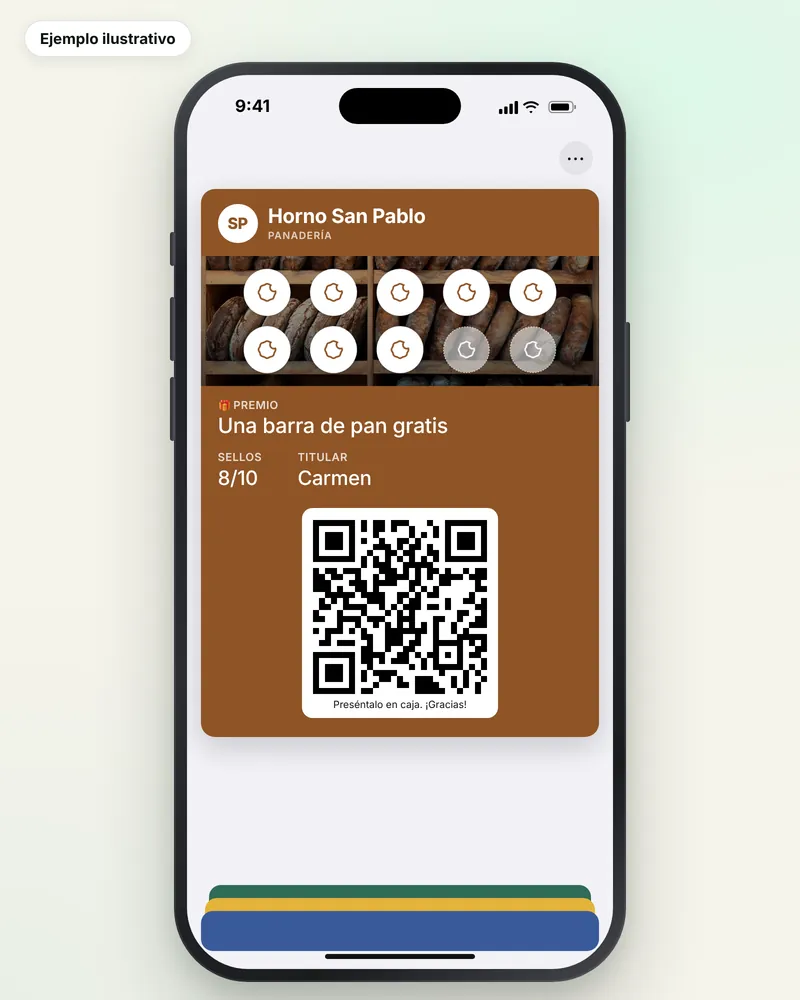
Your regular walks in almost without thinking: a baguette, something for breakfast, a Sunday treat. They're small, quick, very frequent purchases, and that's exactly why the supermarket or the other bakery down the road can take a share without you noticing. Nobody leaves a bakery overnight: one day they buy bread somewhere else because it's handy, and they never get back into the habit.
A digital stamp card on the phone gives that daily purchase a small extra reason to stay with you. And if you also take orders for cakes or celebrations, it helps you reward the customer who chooses you for the big occasions.
Add your bakery's name and logo, choose the reward and how many stamps it takes.
They scan the QR code on your counter and the card is saved in Apple Wallet or Google Wallet in seconds. No apps.
At checkout, you scan their card from the Rondafy dashboard on your phone, tablet or computer.
In your dashboard you see customers, repeat visits and who hasn't been in for a while (Standard and Pro plans).
You choose the reward and how many stamps it takes. Some ideas that fit well:
Because people buy almost every day, the reward can take a little longer than in other businesses: 10 to 12 stamps is a sensible starting point, so the gift (a loaf, a pastry) doesn't eat into your margin. Do the maths with the production cost, not the selling price, and if cards are filling up too fast, raise the number of stamps.
A common question: if one customer buys a loaf and another places a big order, do they count the same? If purchases are very similar, stamps. If tickets vary a lot (small purchases and big orders), a points card may be a better fit: we explain it in points card or stamp card. More reward ideas in reward ideas by type of business.
Rough example: a baguette with a production cost of €0.25 given every 10 purchases of €1.20 means returning about 2% of what that customer spends on bread. Adjust the rule to your margins.
A free baguette or bun after 10 stamps.
The card goes with your customers on the visits they already make:
Scanning the card takes a couple of seconds, less than finding a paper card in a wallet. Whoever is serving stamps from a phone or tablet; there's no need to change your till or any equipment.
It's the most common question. The customer only has to scan a QR code once (you or your staff can help the first time) and the card is saved on their phone. From then on they just show it when they pay. For anyone without a smartphone, you can keep a paper card for a while: there's no need to change everything at once.
Orders are your highest-value purchase. You can have a separate card for them (for example, a discount on the next cake after several orders) or sell gift cards with credit for your shop. Ask in the demo how many different cards your plan includes.
Few and clear: "just 1 stamp to go", a heads-up when you bring out something seasonal (roscón, panettone or whatever's traditional where you are), and a message to anyone who hasn't been in for weeks. Double stamps in the last hour of the day help sell what's left without cutting prices. Notifications are on the Standard and Pro plans.
Announce a special bread, seasonal bakes or holiday opening hours with a notification to the card.
Standard and ProWhen the customer is one stamp away from their reward, the card reminds them on their phone.
Standard and ProIf the customer completes the card and doesn't come for their reward within 3 days, the card reminds them.
Standard and ProThe card can show a notification when the customer walks past your bakery, depending on each customer's device and settings.
Standard and Pro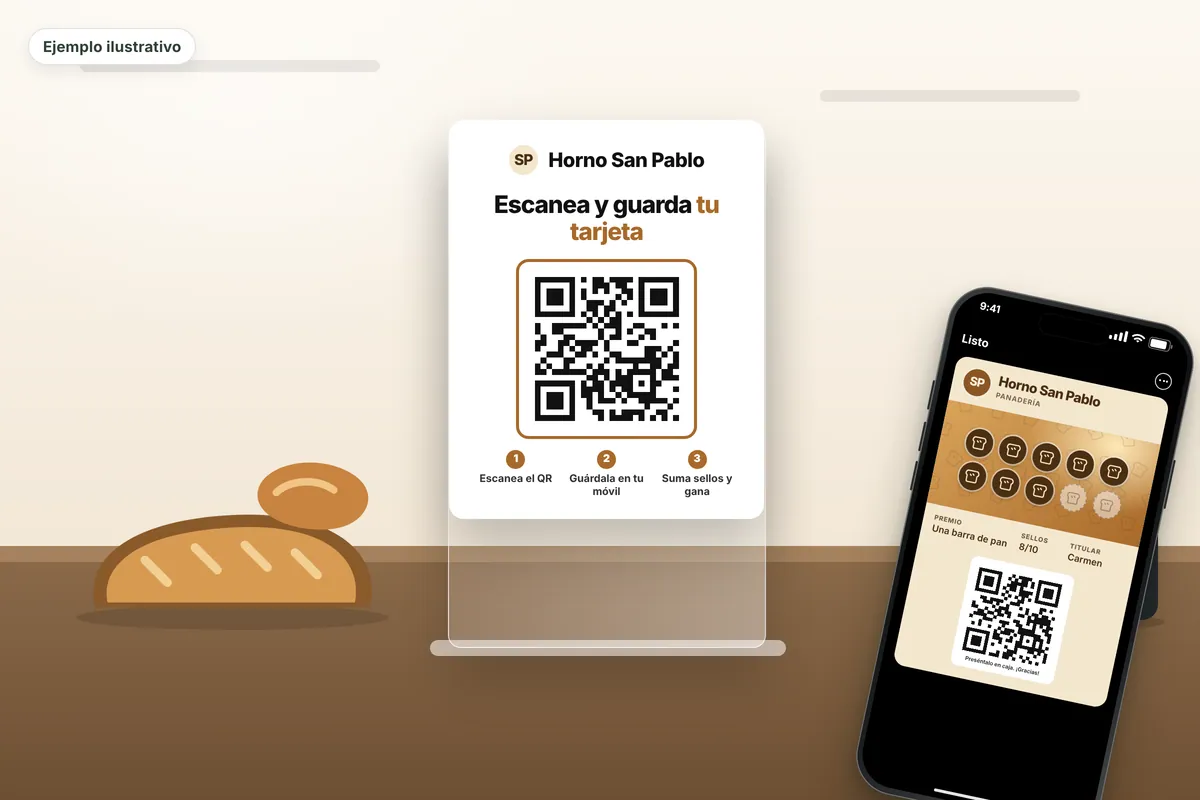
A bakery's paper card stays in a drawer, gets soggy in a bag and gets over-stamped whenever things are busy. The digital card records each scan and tells you who buys every day and who has stopped coming. If you use paper cards today, see how to go digital without losing your customers.
How to work out how many stamps to put on your loyalty card based on how often your customer comes back and the cost of the reward. With examples by sector.
Read guide →Step-by-step guide to creating a loyalty programme in a local business: goal, card type, reward, launch and how to measure whether it works.
Read guide →Rondafy for other sectors too:
Still have questions? Write to us or request a free demo.
Scanning the card takes a couple of seconds, less than finding a paper card in a wallet.
You can have several different cards in the same location, for example one for daily bread and another for cakes. We'll tell you in the demo how many each plan includes.
They just scan a QR code once and the card is saved on their phone. From then on they just show it. If someone doesn't have a smartphone, you can keep paper for a while.
Yes, the phone or tablet you stamp with needs an internet connection, like any card terminal.
Yes, Rondafy also has a gift card with credit for your shop. We'll show you how it works in the demo.
If purchases are similar from one day to the next, stamps: they can be explained in one sentence. If you mix small purchases with big orders, points reward spend better.
 START TODAY
We design your card with you, and within minutes your customers can save it on their phone. Any plan can be tried free for 14 days.